


Shared responsibility, but whose job is it?
Employer reputation takes shape where employee experiences, company communication and public opinion meet. Who in a large organisation brings this information together and decides what to do with it?
As an HR leader, you may have access to recruitment results, employee engagement surveys and employer branding reports. You know which roles are hardest to fill and what candidates are asking about.
Yet some of the information shaping their perception of your company falls outside these reports. It appears in the media, public discussions, leaders’ statements and AI responses. When the board asks why the company is failing to attract certain specialists, it is difficult to assess the role of reputation if nobody connects this information with what happens during recruitment.
Who in your organisation has this view of employer reputation?
In a large company, the answer may be less obvious than it seems. HR, corporate communications, PR and marketing each work to their own priorities. Add different locations, subsidiaries and markets to the mix. The expertise is there, but the task of bringing it all together does not always have a clear owner.
In our previous article, “How AI verifies your EVP”, we explored the gaps between an employer’s promises and its online image. Now, let’s look at how a company can move from recognising a problem to deciding who will take responsibility for it. This matters particularly when every department shares responsibility for reputation, yet no single team can fully influence all the decisions, experiences and information that shape perceptions of the employer.
What is employer reputation, and why does it extend beyond HR?
Employer reputation is a company’s reputation as an employer, shaped by people’s experiences and the information circulating about the organisation, both internally and externally. A job interview, the way an employee’s departure is handled (offboarding), a board decision or a manager’s public statement on LinkedIn can all influence it. Some of these experiences later appear in reviews or online discussions. A company can influence this perception, but it cannot decide for itself how others will judge it.
WTW’s “Reputational risk readiness report 2026” shows how difficult it can be to see the full picture. As many as 82% of respondents rank reputation among their top three or top five risks, yet only 37% say they understand where negative opinions and sentiment towards their brand are concentrated.
The survey was conducted in early 2026 among 500 senior executives across 20 countries. It covers corporate reputation overall, but highlights a challenge worth considering when assessing employer reputation too: we may know that reputation matters and still know too little about what is damaging it.
Read WTW’s 2026 report on reputational risk.

Where does the gap in responsibility for reputation emerge?
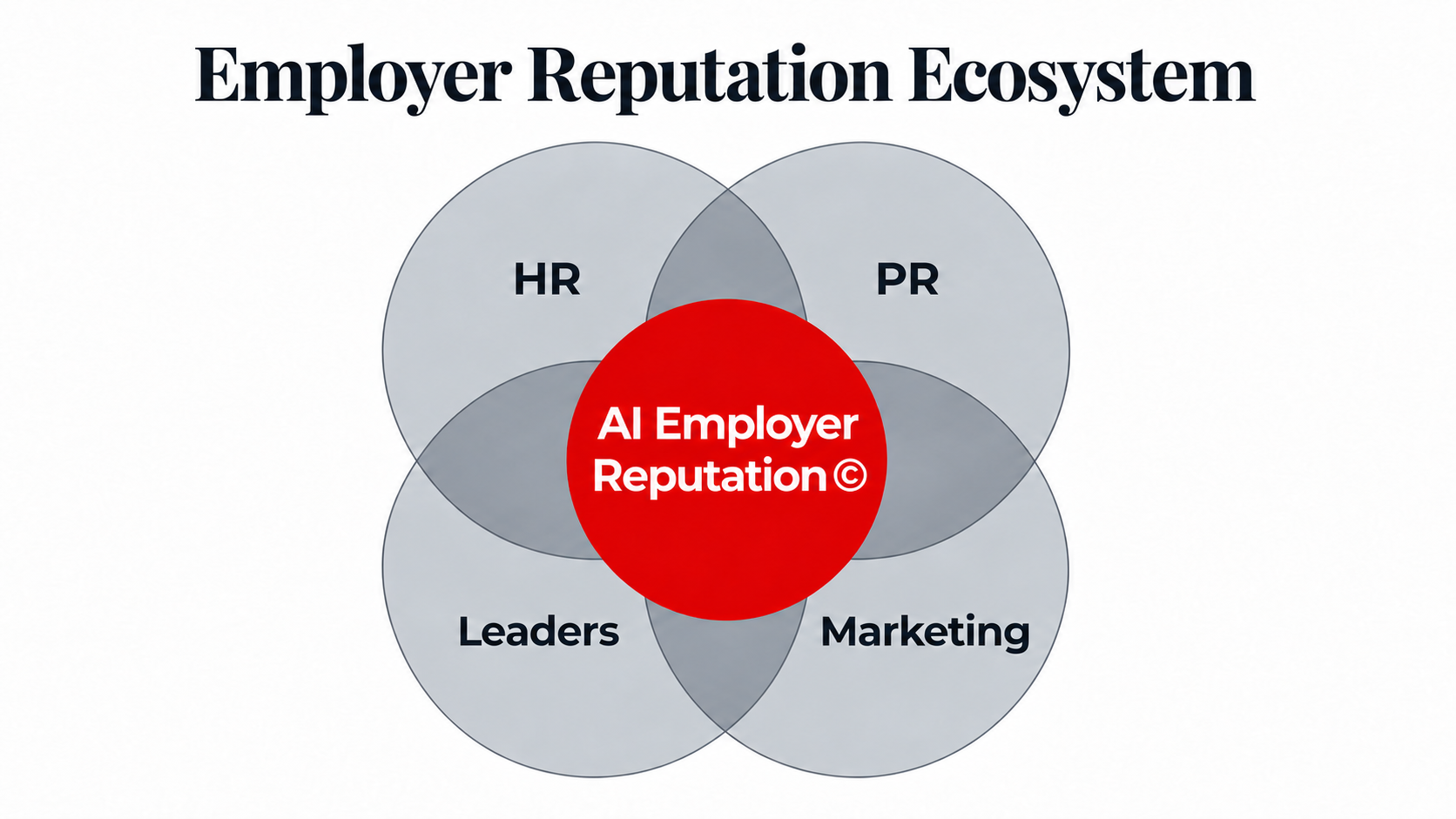
HR understands employee processes and experiences. PR understands the media landscape, marketing manages brand channels, and digital teams ensure information is accessible online. These capabilities also matter when a company starts examining how AI portrays its reputation. But this creates tasks that may never have belonged to any of these teams before.
Who checks how AI tools describe the organisation as an employer?
Who traces inaccurate information back to its sources?
Who handles an issue that involves employee reviews, leadership communication and careers page content at the same time?
In its February article “9 trends shaping work in 2026 and beyond”, Harvard Business Review discusses AI challenges involving organisational culture, processes and governance. These changes provide a broader context for the question of who is responsible for AI Employer Reputation.
Traditional organisational structures are falling short. Brand reputation has become “no man’s land”: an area no single department fully covers, not even PR. The problem rarely lies in a lack of expertise. It almost always lies in the absence of a clear process owner.
Leaders also shape employer reputation
Assigning reputation to HR or PR will not stop managers’ decisions from influencing it. Managers explain changes, respond to difficulties and show employees what company values mean in practice. If individual leaders explain the same principles differently, employees receive conflicting accounts of how their organisation works.
According to Gallup, only 20% of employees strongly agreed that they trusted their organisation’s leadership. In its September article, Gallup also highlights the importance of shared priorities and consistent leadership communication. Read “How to improve leadership alignment”.
These findings concern the US workforce, rather than providing a diagnosis of Polish companies. They are nevertheless a reason to bring business leaders into the conversation about employer reputation.
A company may say it welcomes feedback, but a manager’s behaviour will show an employee whether they can actually raise a concern. It may promote career development, but everyday practices determine access to new assignments and promotion opportunities. That is why internal communication and leadership communication should be part of the employer reputation conversation from the moment changes are being planned.

AI Employer Reputation © at LoveJob: where do we start?
An assessment is worth considering if:
- Candidates ask about information that does not appear in HR materials or on your careers page.
- AI tools such as ChatGPT, Gemini, Claude or Perplexity cite outdated sources, old allegations or incomplete information about your company.
- Different locations, teams or recruiters communicate conflicting terms of employment.
- Successive reports highlight the same problems, but nobody is responsible for resolving them.
- Your company is expanding its employer branding activities, but nobody regularly checks how AI tools and search results present it.
- Candidates raise questions about workplace culture, management style, overtime, benefits, development opportunities or pressure at work.
You do not have to wait for a crisis. Want to find out what your current reports are missing about your company’s reputation? Talk to us about AI Employer Reputation ©. Tell us what you monitor today and where questions remain unanswered. That gives us a starting point for defining the scope of the assessment and how it can support your team’s work. You can also email us directly at office@lovejob.pl.