


A guide to MRO challenges, trends, and the future of employer branding
The global aviation sector is facing massive operational shifts. Therefore, understanding how MRO industry changes will impact jobs and hiring is crucial for long-term resilience. Today, high aircraft demand and part shortages force airlines to fly older fleets. Consequently, companies must adapt their recruitment sourcing and enhance their Employer Branding initiatives to secure technical talent.
The median age of EASA Part-66 license holders is now peaking at 54 years old. Furthermore, European training pipelines produce a permanent structural deficit of 4,000 certified technicians annually. This capacity-demand squeeze is tightening rapidly across the CEE region.
We audited the digital presence of MRO and aviation companies across Europe and the UK, analyzing data and candidate experience.
- 20+ Leading Employers – a comprehensive desk research audit of the largest companies in the aerospace and MRO sector.
- Candidate Journey – analysis of digital touchpoints, career portals, and recruitment pipelines.
- Social Sentiment – analysis across independent peer-to-peer review ecosystems (Glassdoor, GoWork, Kununu).
- Market Benchmarking – evaluating employers’ digital presence against their challenges.
Consequently, we compiled our findings into a streamlined new study: The MRO & Aerospace Talent & Employer Branding Report.
Want to read the full report?
Fill out the form and we’ll send it straight to your email:
Below, we explore the core themes of our report. We outline how strategic people communication holds the key to operational success.
1. Does breakthrough technology automatically attract top engineers?
Today, many aviation recruitment campaigns focus heavily on high-tech innovations. They feature green technology, hydrogen propulsion, and the electric aircraft (eVTOL) revolution. This cinematic branding is perfect for attracting investors. However, it often misses the mark when attracting experienced technical talent.
A massive gap often exists between a polished corporate PR video and the physical reality of the hangar floor. Consequently, this disconnect creates a severe corporate dissonance. Discerning candidates notice this mismatch immediately. Therefore, it often leads to high application drop-off rates in your ATS.
Realignment best practices:
- Move past over-polished renders: True brand alignment begins with a thorough “Hangar and Boardroom” audit. By conducting deep focus groups directly with shift workers, organizations can uncover real operational frustrations. Furthermore, you can address issues like shift scheduling and turnaround pressures honestly.
- Segment your message: Experienced senior engineers and certified mechanics do not apply based on generic lifestyle PR. They make career moves based on hard operational criteria. For instance, they look for project maturity, safety standards, and design autonomy. Therefore, your branding should develop separate, dedicated EVP pillars. You need one for office-based engineers, and a different one for mechanics doing heavy maintenance.
2. Sourcing beyond aviation. Growing your own pipelines
To combat the shortage of trade-school graduates, successful companies build non-traditional pipelines. Consequently, they invest heavily in structured Training and Development Initiatives.
- The “Auto-to-Aero” pathway: Skilled diagnostic mechanics from the automotive and diesel sectors make exceptional candidates. You can bring these professionals into the hangar as support mechanics. Therefore, our “AeroBridge” competence conversion programs pair them with experienced mentors. While they gain hands-on experience, you can fund their aviation licensing exams to create a new talent stream.
- Military-to-civilian transitions: Military maintenance veterans are a premier source of safety discipline and technical skill. Consequently, providing structured transition support makes your company a natural destination for veterans. You should offer fully covered civil licensing courses, written test funding, and relocation assistance.
3. Mitigating change fatigue on the hangar floor
Aviation is digitizing fast. However, studies show that up to 70% of digital change projects fail because of poor communication. Teams on the hangar floor are already under immense operational pressure. Therefore, new IT tools like AMOS or ERP systems can easily cause severe change fatigue.
Realignment best practices:
- Human-centric change communication: Successfully managing these digital transitions requires clear translation. You must translate complex software rollouts into simple benefits for your team using frameworks like ADKAR.
- Equip your shop-floor leaders: Do not rely on dry, top-down corporate emails. Instead, equip your crew chiefs and shift supervisors with practical “Leader Talking Points” and Q&As. As a result, they can answer team questions with confidence and empathy.
- A safety-first “Just Culture”: Licensed engineers carry immense personal and legal liability for airworthiness. Therefore, they must work in an environment of absolute trust. A mature Just Culture ensures that honest human errors are treated as opportunities for systemic learning.
4. Modernizing the deskless employee experience
Mechanics and hangar staff do not sit at desks. Consequently, communication becomes incredibly difficult. To keep them engaged, you need modern, mobile-friendly internal communication tools.
Realignment best practices:
- Intranet SharePoint design: Building intuitive internal communication portals is essential. It ensures that deskless hangar workers have instant access to company news, safety procedures, and leadership updates on any device.
- Interactive career portals: Designing interactive career websites is highly effective. You can visually map the multi-year progression from an apprentice to a licensed B1/B2 engineer. As a result, this simplifies the candidate journey and cuts application drop-off rates.
Real-world proof. The EME Aero success story
This disciplined approach is not just a theory. Instead, it is a proven strategy that delivers measurable business results.
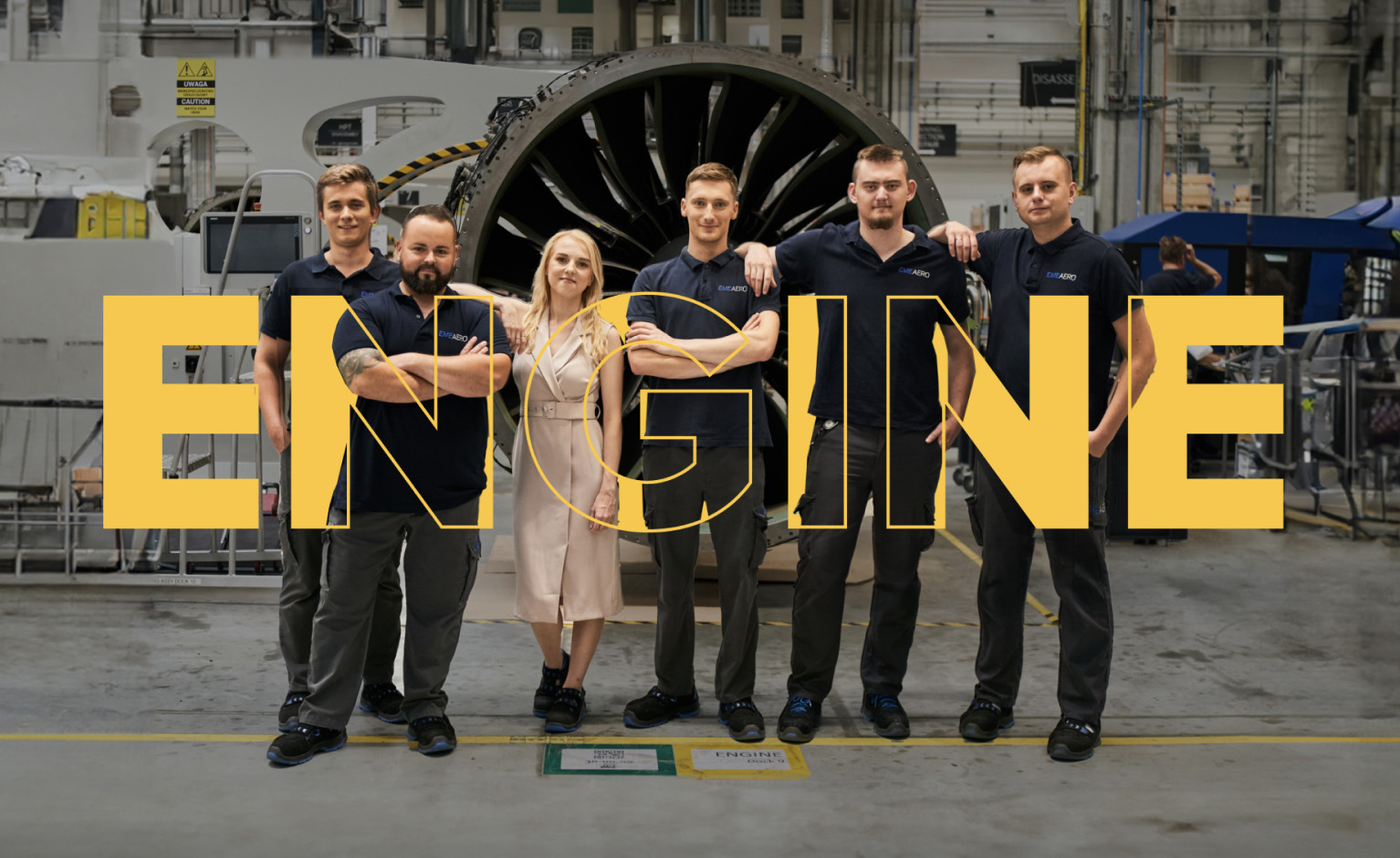
At LoveJob, we have spent years proving this model works in high-certification environments. For example, during our strategic partnership with EME Areo in Poland (the advanced engine MRO joint venture between Lufthansa Technik and MTU Aero Engines), we managed their comprehensive employer branding.
When they rolled out complex global IT systems, we designed a human-centric narrative. Furthermore, we equipped hangar supervisors with customized Leader Talking Points. As a result, this minimized change fatigue, drove rapid digital adoption, and reduced IT support tickets.
By aligning your operational reality with a consistent employee narrative, your organization can achieve:
- A 62.3% increase in brand awareness in highly competitive engineering markets like Poland.
- A significant reduction in staff turnover and change fatigue during major IT rollouts.
- The ability to generate over 120 qualified applications for hard-to-fill technical roles.
Let’s stop creating empty advertising campaigns. Instead, let’s build a consistent narrative, secure disciplined execution, and protect your operations from the global talent crisis.
FAQ
How will MRO industry changes impact jobs and hiring in 2026?
The massive demand for heavy maintenance forces airlines to keep older aircraft flying. Consequently, this drives a record need for technicians. However, MROs face longer hiring cycles due to a structural labor shortage. Winning companies in Poland and Europe are shifting to competency-based hiring. Furthermore, they are expanding recruitment sourcing to military veterans and automotive mechanics.
What are the best training and development initiatives for aircraft mechanics?
Successful training initiatives focus on building clear career progression pathways. Therefore, companies should offer fully funded aircraft Type Ratings and clear technical tracks. This approach ensures engineers are not forced into management. In addition, structured apprentice programs help onboard non-licensed workers quickly.
Why are employer branding initiatives critical for MRO companies?
Mechanics work in highly regulated environments under intense turnaround pressure. Therefore, Employer Branding Initiatives build trust by accurately representing hangar conditions. They must highlight key benefits like scheduling predictability, workplace safety, and modern tooling.
Fill out the form
and get the full MRO & Aerospace Talent & Employer Branding Report: